

Your Guide to Skin Cancer Screening in Bridgewater, NJ
By Dr. Parth Patel, MD, Fellowship-Trained Mohs Surgeon, PS Dermatology and Surgery, Bridgewater, NJ
Skin cancer is the most common cancer in the United States, affecting an estimated one in five Americans during their lifetime. For residents searching for skin cancer screening in Bridgewater, NJ, understanding the full spectrum of early detection, from at-home self-checks to professional dermatologic evaluation, can make all the difference in outcomes. At PS Dermatology and Surgery, our dermatology and dermatologic surgery team provides comprehensive screening services for patients throughout Central New Jersey, including Somerset, Hunterdon, and Middlesex counties. Stay informed with the latest skin cancer news as part of your proactive approach to skin health.
This guide walks you through every step of the screening journey:
- Visual Warning Signs: Learn what skin cancer looks like and how to spot it
- Self-Exam at Home: A step-by-step approach to checking your own skin
- When to See a Dermatologist: Know when a mole needs professional evaluation
- Skin Biopsy: Understand the types, procedures, and what results mean
- Your Screening Appointment: What to expect during a professional screening
- Schedule Your Screening: Take the next step toward protecting your skin
What Does Skin Cancer Look Like? The ABCDE Rule and Visual Warning Signs
Skin cancer often presents as a visible change on the skin's surface, making visual recognition one of the most powerful tools for early detection. The key takeaway: learning to identify suspicious spots empowers you to seek evaluation before a potential cancer advances. At PS Dermatology and Surgery in Bridgewater, NJ, we encourage every patient to become familiar with the common appearances of the three major skin cancer types.
Common Appearances of Basal Cell, Squamous Cell, and Melanoma
Each type of skin cancer tends to look different, though overlap exists. Common visual characteristics include:
- Basal cell carcinoma (BCC): Often appears as a pearly or waxy bump, a flat flesh-colored or brown lesion, or a bleeding and scabbing sore that heals and returns. BCC is the most frequently diagnosed skin cancer, and patients who notice these changes may benefit from early basal cell carcinoma treatment to prevent the lesion from growing deeper into surrounding tissue.
- Squamous cell carcinoma (SCC): May present as a firm red nodule, a flat lesion with a scaly or crusted surface, or a sore that does not heal. SCC frequently develops on sun-exposed areas such as the face, ears, and hands.
- Melanoma: Often appears as a new dark spot or a mole that changes in size, shape, or color. Melanoma can develop anywhere on the body, including areas that receive little sun exposure.
Importantly, skin cancer can develop on any skin tone. Darker skin tones may develop melanoma in less obvious areas like the palms, soles, or under nails. We will be publishing a detailed visual guide to skin cancer warning signs with photo comparisons to help you identify concerning changes.
The ABCDE Framework and Its Limitations
The ABCDE rule provides a practical framework for evaluating moles at home:
| Letter | What to Look For |
|---|---|
| A (Asymmetry) | One half of the mole does not match the other |
| B (Border) | Edges are irregular, ragged, or blurred |
| C (Color) | Multiple shades of brown, black, red, white, or blue within one spot |
| D (Diameter) | Larger than 6mm (about the size of a pencil eraser), though melanomas can be smaller |
| E (Evolving) | The mole is changing in size, shape, color, or elevation |
A mole that meets even one of these criteria warrants professional evaluation. However, the ABCDE rule has limitations: it was primarily designed for melanoma detection and may not capture nodular melanomas or non-melanoma skin cancers effectively. Some benign moles may also meet one or more criteria. Our upcoming article on the ABCDE rule for moles will cover these nuances in greater detail, including when the framework falls short and what additional signs to watch for.
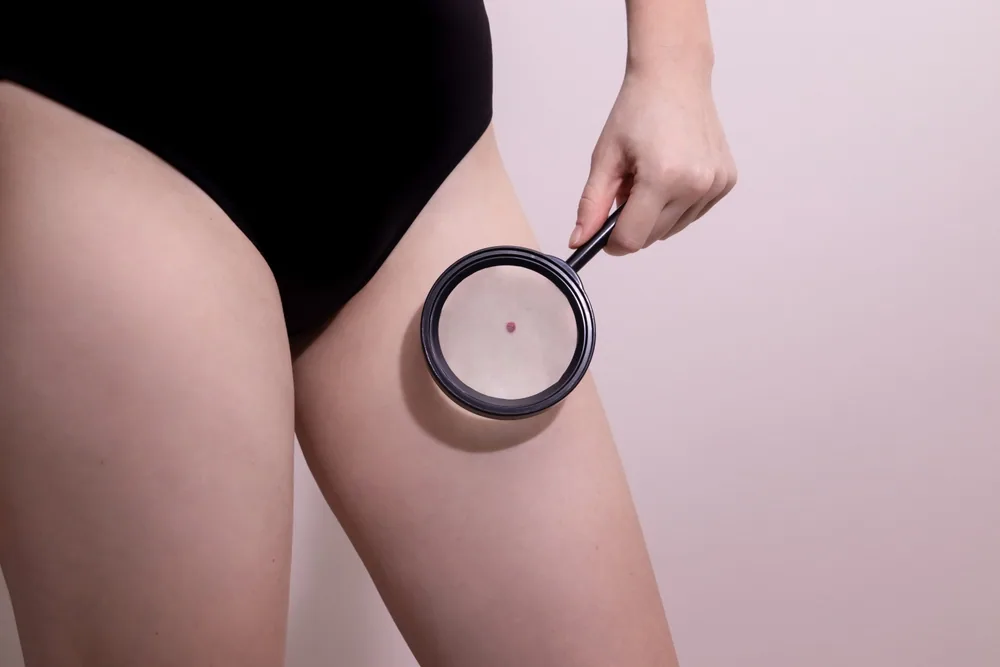
How to Perform a Full-Body Skin Self-Exam at Home
Regular skin self-exams are one of the simplest and most effective habits for catching changes early. The American Academy of Dermatology recommends performing a self-exam monthly, which allows you to become familiar with your skin's baseline and notice new or evolving spots quickly. Self-exams complement professional screenings but should never replace them.
Tools and Setup for an Effective Self-Exam
A thorough self-exam requires a few basic items:
- A well-lit room (natural daylight or bright overhead lighting)
- A full-length mirror
- A handheld mirror for viewing hard-to-see areas
- A comb or hair dryer for parting hair to examine the scalp
- A chair or stool for examining your feet and lower legs
Choose a consistent time each month so the exam becomes routine. Many patients find it helpful to perform the check after a shower when the skin is fully visible.
A Systematic Body Region Checklist
Work through your body methodically to ensure no area is missed:
- Face, ears, and neck (front and sides)
- Scalp (use a comb to part hair in sections)
- Hands, including between fingers and under nails
- Arms, including underarms
- Chest and abdomen
- Upper and lower back (use the handheld mirror)
- Buttocks and backs of legs
- Feet, including soles and between toes
Areas like the scalp, the skin behind the ears, and the spaces between toes are commonly overlooked but can develop skin cancers, particularly in patients who spend time outdoors at places like Duke Island Park or the Delaware and Raritan Canal Trail in Somerset County. For a complete walkthrough with illustrated instructions, read our full-body skin self-exam guide, which covers each body region in detail.
When Should You See a Dermatologist for a Suspicious Mole?
Most moles are benign, and finding something unusual during a self-exam does not automatically mean cancer. However, certain changes should prompt a timely appointment with a dermatologist rather than a wait-and-see approach. Understanding when to see a dermatologist for a mole helps you make informed decisions and avoid unnecessary anxiety or dangerous delays.
Red-Flag Changes That Warrant an Immediate Appointment
Contact a dermatologist promptly if you notice any of the following:
- A mole that is growing rapidly or has changed color within weeks
- A spot that bleeds, oozes, or crusts without a clear cause
- A sore that does not heal within three to four weeks
- A new dark streak under a fingernail or toenail
- Any spot that itches, hurts, or feels different from surrounding skin
- A mole with multiple colors or an irregular, scalloped border
These changes do not confirm a diagnosis, but they do warrant professional evaluation. Your dermatologist can use tools like dermoscopy to examine the spot at magnification and determine whether a biopsy is needed.
Why Early Evaluation Improves Outcomes
Research consistently demonstrates that early-stage skin cancers have significantly higher survival rates. According to the Skin Cancer Foundation, the five-year survival rate for melanoma detected in its earliest stage is approximately 99%. When melanoma spreads to distant organs, that rate drops considerably. Early evaluation also often means less invasive treatment, smaller scars, and faster recovery. The difference between a routine office procedure and a complex surgical intervention frequently comes down to timing.
"The vast majority of suspicious moles we evaluate turn out to be benign. But for the ones that are not, catching them early changes everything. A few minutes of evaluation can save months of treatment."
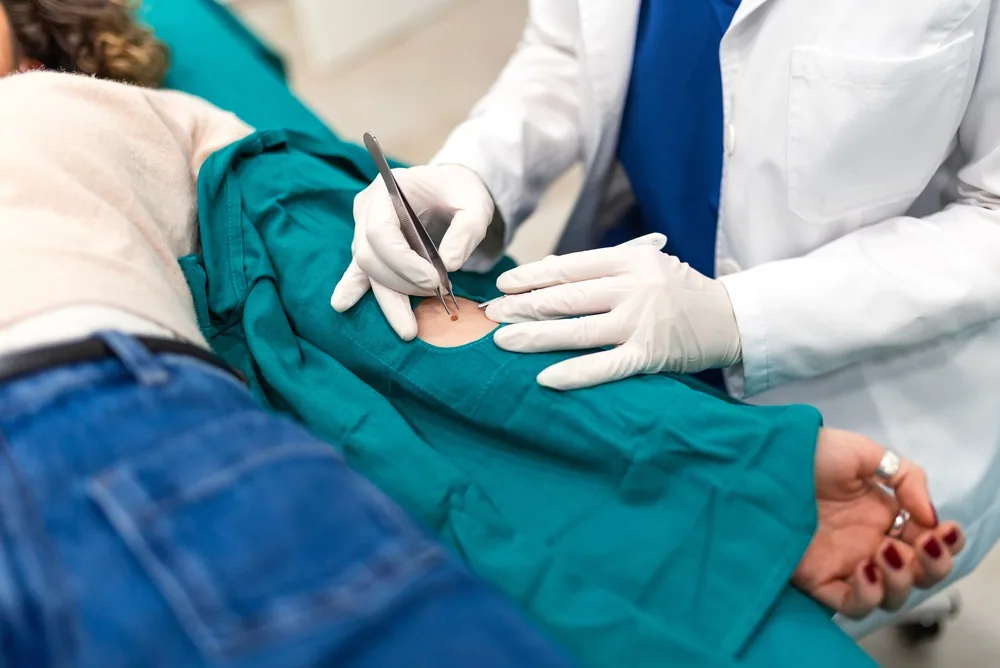
Skin Biopsy: Types, Procedures, and Understanding Your Results
A skin biopsy is a routine diagnostic procedure that removes a small sample of tissue for microscopic examination. Many patients feel anxious about the word "biopsy," but the procedure is generally quick, well-tolerated, and performed in the office under local anesthesia. Understanding the different skin biopsy types and results can help ease concerns before your appointment.
Shave, Punch, and Excisional Biopsy Explained
Your dermatologist selects the biopsy type based on the lesion's size, location, and suspected diagnosis:
- Shave biopsy: A thin layer is shaved from the skin's surface using a blade. This approach is common for raised lesions and typically heals within one to two weeks.
- Punch biopsy: A small circular tool removes a core of skin including deeper layers. According to the Mayo Clinic, punch biopsies typically range from 2mm to 6mm in diameter and may require one or two stitches.
- Excisional biopsy: The entire lesion is removed along with a margin of surrounding tissue.
All three types involve numbing the area with local anesthetic before the procedure. Most patients describe the sensation as a brief pinch followed by pressure. If a biopsy reveals a skin cancer that requires further treatment, your provider may recommend options ranging from additional excision to specialized approaches like Mohs surgery for skin cancer, which removes tissue layer by layer to preserve as much healthy skin as possible.
Reading Your Pathology Report
Pathology results typically arrive within one to two weeks. Common terms you may encounter include:
- Benign: No cancer cells detected
- Dysplastic nevus: An atypical mole that may require monitoring or additional removal depending on the degree of atypia (mild, moderate, or severe)
- Carcinoma in situ: Cancer cells confined to the outermost layer of skin, which generally has an excellent prognosis with appropriate treatment
- Invasive: Cancer cells have grown beyond the surface layer into deeper tissue
- Clear margins: The edges of the removed tissue are free of cancer cells
Your dermatologist will review the findings with you and discuss next steps, which may include monitoring, additional procedures, or referral to a specialist. Consult your provider about any terms on the report that are unclear.

What to Expect During a Skin Cancer Screening Appointment
A professional skin cancer screening is a thorough, head-to-toe examination performed by a board-certified dermatologist trained to identify subtle changes that patients may overlook. At our Bridgewater office, the entire process, from check-in through follow-up recommendations, is designed to be efficient and comfortable. For a detailed walkthrough of how to prepare and what happens at each stage, read about the full skin cancer screening appointment experience.
Before, During, and After Your Screening
Here is what a typical screening visit looks like:
- Check-in and intake: You will complete a brief questionnaire about your skin history, family history of skin cancer, sun exposure habits, and any spots of concern.
- The examination: You will change into a gown, and the dermatologist will systematically examine your skin from scalp to soles. A dermatoscope (a handheld magnifying instrument with polarized light) may be used to evaluate specific moles more closely.
- Discussion and plan: After the exam, your dermatologist will review any findings, recommend next steps (which may include biopsies, monitoring, or routine follow-up), and answer your questions.
Many patients wonder about the level of undressing required. While a full-body exam is most thorough when all skin is visible, your comfort is always prioritized. You can discuss preferences with your provider before the exam begins.
How Often Should You Schedule Screenings
The CDC recommends that individuals discuss screening frequency with their healthcare provider based on personal risk factors. General guidelines suggest:
- Average risk: Annual screening for adults, particularly those over 40
- Higher risk: Every six months for patients with a personal or family history of skin cancer, a high mole count (50 or more), a history of blistering sunburns, or immunosuppression
- Post-treatment: Your dermatologist may recommend more frequent monitoring for the first several years following a skin cancer diagnosis
Patients serving in outdoor occupations or those who enjoy Central New Jersey's many outdoor activities, from hiking the Sourland Mountain Preserve to weekend sports in local parks, such as Johnson Park, may benefit from more frequent evaluations given their cumulative UV exposure.
Protect Your Skin: Schedule Your Screening Today
Early detection through consistent self-exams and regular professional screenings remains the most effective strategy for managing skin cancer risk. From learning what warning signs look like, to understanding the ABCDE rule, to knowing when a mole needs a dermatologist's evaluation, each step in the process gives you greater control over your skin health. Pairing your screening routine with daily sun protection habits, including choosing the right mineral sunscreen, strengthens your defense year-round.
PS Dermatology and Surgery in Bridgewater, NJ is here to support patients throughout Central New Jersey, from Somerset and Hunterdon counties to Middlesex County and beyond. Dr. Parth Patel and our experienced team provide comprehensive skin cancer screening, diagnosis, and treatment in a welcoming, patient-centered environment. Whether you have a specific concern or simply want to stay proactive about your skin health, we are ready to help.
Sources
- Skin Cancer Foundation: Skin Cancer Facts and Statistics
- CDC: Skin Cancer Prevention
- Mayo Clinic: Skin Biopsy
- American Academy of Dermatology: Skin Cancer
Frequently Asked Questions
How often should I get a skin cancer screening?
Most dermatologists recommend an annual full-body skin cancer screening for adults, though your provider may suggest more frequent visits based on your individual risk factors. People with a history of skin cancer, numerous moles, or fair skin may benefit from screenings every six months. Talk to your dermatologist about the right schedule for you.
What should I expect during a skin cancer screening appointment in Bridgewater, NJ?
A professional skin cancer screening typically involves a head-to-toe visual examination by a board-certified dermatologist. The provider examines moles, birthmarks, and other pigmented areas using a dermatoscope for magnified evaluation. The appointment usually takes 10 minutes, and no special preparation is needed beforehand.
How do I perform a skin self-exam at home?
A thorough self-exam involves checking your entire body in a well-lit room using a full-length mirror and a hand mirror for hard-to-see areas. Examine your scalp, between your toes, and your back carefully. Perform self-checks regularly and note any new or changing spots to discuss with your dermatologist.
What does the ABCDE rule mean for identifying suspicious moles?
The ABCDE rule is a guide for evaluating moles: Asymmetry, Border irregularity, Color variation, Diameter larger than six millimeters, and Evolving size, shape, or color. Any mole exhibiting one or more of these characteristics may warrant professional evaluation. Early identification using this method can support timely detection of melanoma.
What happens if a suspicious spot is found during my screening?
If your dermatologist identifies a concerning lesion, they may recommend a skin biopsy to determine whether cancerous cells are present. A biopsy involves removing a small tissue sample under local anesthesia for laboratory analysis. Results typically return within one to two weeks, and your provider will discuss next steps based on the findings.
Who is at higher risk for skin cancer in Central New Jersey?
Individuals with fair skin, a history of sunburns, extensive sun exposure, family history of skin cancer, or numerous atypical moles may face elevated risk. Outdoor workers and those who used tanning beds also have increased susceptibility. Residents of Central New Jersey should consult a dermatologist to assess their personal risk factors.
How do I know if a mole is cancerous?
A mole may be concerning if it changes in size, shape, or color, has irregular borders, or appears different from your other moles. Itching, bleeding, or crusting can also be warning signs. Only a dermatologist can determine whether a mole is cancerous through clinical examination and biopsy, so consult your provider promptly.
Ready to talk with a dermatologist?
Schedule a visit with our team at PS Dermatology and Surgery in Bridgewater, NJ - serving patients throughout Central New Jersey.