
What is Hidradenitis Suppurativa?
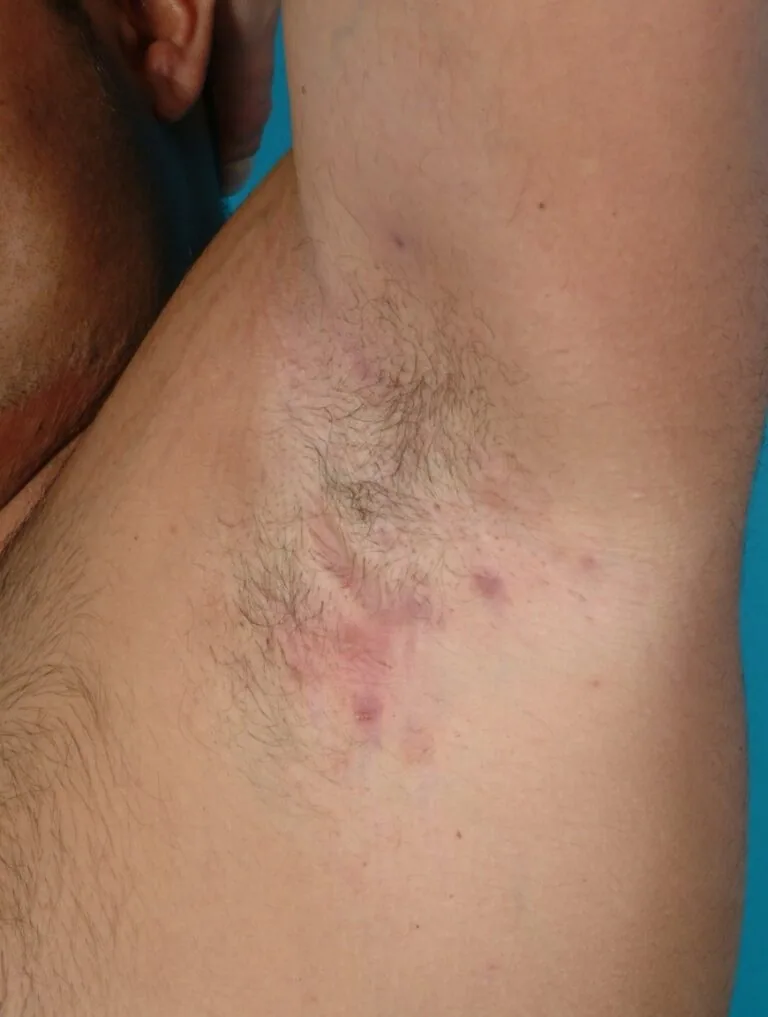
Hidradenitis suppurativa (HS), or acne inversa, is a chronic inflammatory skin disorder which affects the skin folds: mostly armpits, groins, the anogenital region, and under the breasts. In its developed form, the lesions appear as painful nodules with a tendency to scar and form abscesses. Its recurrent and progressive course can drastically affect a patient's mental and physical wellbeing.
Epidemiology
The disease is definitely more common in women than in men. It is most active between the ages of 20 and 40 years, often starting right after puberty and subsiding with the onset of menopause. Besides the related hormonal changes, other risk factors have been noted including family history, smoking, obesity, inflammatory bowel disease, and genetic predisposition. No link with diabetes, poor hygiene, hair removal, deodorant use, or regular acne vulgaris has been observed.
What Causes Hidradenitis Suppurativa?
To this day, the exact cause of the disorder remains unknown. It is believed that acne inversa primarily affects the hair follicles, which get clogged due to local hyperkeratosis. This process triggers an intense inflammatory response which can later spread to deeper skin layers and damage or completely destroy apocrine sweat glands.
Signs and Symptoms
Symptoms of hidradenitis suppurativa closely reflect its progressive course. First, clogging of the hair follicles leads to the formation of multiple comedones, pustules, and papules, which can strongly resemble regular acne vulgaris. Then, as the inflammatory response spreads to the deeper skin layers, pus-filled abscesses occur.
Further progression of the disease leads to the formation of painful, joined-together nodules that look like furuncles or boils. These, in turn, lead to scarring and the development of sinuses — tunnels or cavities connecting to the skin or mucosal surface.
General Daily Measures
- Smoking cessation — it can lead to improvement within a few months
- Loose-fitting clothing — it will not further irritate the affected skin
- Weight loss via regular physical activity and a healthy, balanced diet
- Using only gentle, fragrance-free cosmetics
- Oral over-the-counter analgesics for pain control, such as paracetamol or ibuprofen
Hidradenitis Suppurativa Treatment Options
HS can be treated with triamcinolone (Kenalog®) injections, which have been proven effective for small cysts. Topical options include antibiotics like clindamycin with benzoyl peroxide, antiseptics, topical steroids, and topical resorcinol.
For oral therapy, antibiotics from the tetracycline or macrolide groups are used, including tetracycline, doxycycline, minocycline, and azithromycin. Hormonal medications like antiandrogens (Drospirenone, Spironolactone, Finasteride), insulin sensitizing medications (Metformin), and supplement options are also available treatments. In more resistant cases, immunomodulatory drugs seem to be helpful, including short-term systemic corticosteroids, as well as biological injections: Adalimumab (HUMIRA®), Secukinumab (Cosentyx®), Infliximab (REMICADE®), and Ustekinumab (Stelara®) have also shown benefit. PS Dermatology & Surgery are experts in treating Hidradenitis Suppurativa, and will adjust the pharmacological therapy specially to your personal needs.